
CTPAT Trade Compliance (Forced Labor)
Overview
Effective August 1, 2022, the CTPAT (Customs Trade Partnership Against Terrorism) Trade Compliance program introduced six new requirements known as the CTPAT Trade Compliance Forced Labor Requirements. These requirements obligate participating importers to actively identify and prevent forced labor within their supply chains.
Below are the six CTPAT Trade Compliance forced labor requirements:
- Risk-Based Business Mapping
Trace your full supply chain and pinpoint where forced labor is most likely to occur, factoring in the suppliers, sourcing regions, and product categories that carry the greatest exposure for your business. - Evidence of Implementation
Demonstrate that your social compliance program is actually operating, not just on paper, by documenting activities such as supplier audits and internal training and showing you can isolate the highest-risk segments of your supply chain. - Code of Conduct
Establish a formal statement declaring your company's stance against forced labor and its commitment to supply chain mapping, backed by enforceable policies, procedures, and records proving those measures are in effect. - Due Diligence and Training
Educate your suppliers on your social compliance expectations so they can recognize and help eliminate forced labor risks within their own operations and sub-tiers. - Remediation Plan
Have a defined plan ready to act on if forced labor is discovered, including the steps for correction and the process for reporting the finding to CBP. - Shared Best Practices
Contribute lessons learned and effective practices back to the CTPAT Trade Compliance community to collectively strengthen forced labor prevention.
How GRAT™ can help:
- GRAT™ maps your full supply chain, including third and fourth tier suppliers. It uses AI to score risk by supplier, region, and product, so your highest-exposure points are surfaced automatically.
- GRAT™ logs your due diligence as it happens, generating audit-ready reports and dashboards you can present to CBP to prove your social compliance program is active.
- Our advisory team helps you build a defensible Code of Conduct, and GRAT™ retains the records that show your policies are actually being enforced.
- GRAT™ runs continuous supplier due diligence while our experts deliver the social compliance training suppliers need to identify and prevent forced labor.
- GRAT™ flags emerging risk in real time and supports a defined remediation workflow, including the steps and disclosure process for reporting findings to CBP.
- GRAT™'s reporting turns what's working into shareable intelligence, letting you contribute proven practices back to the CTPAT community.
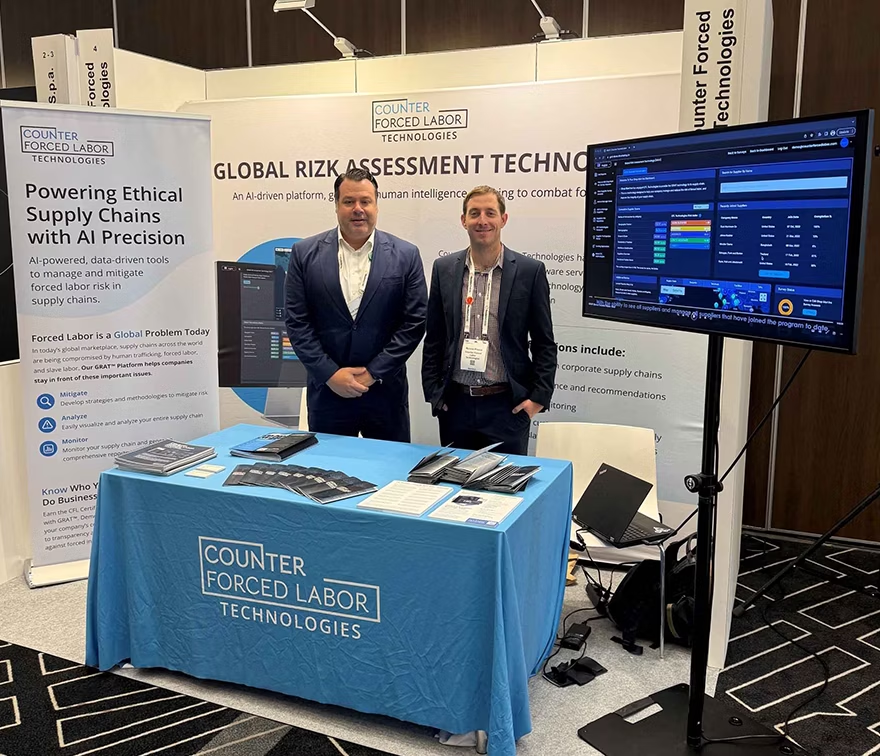

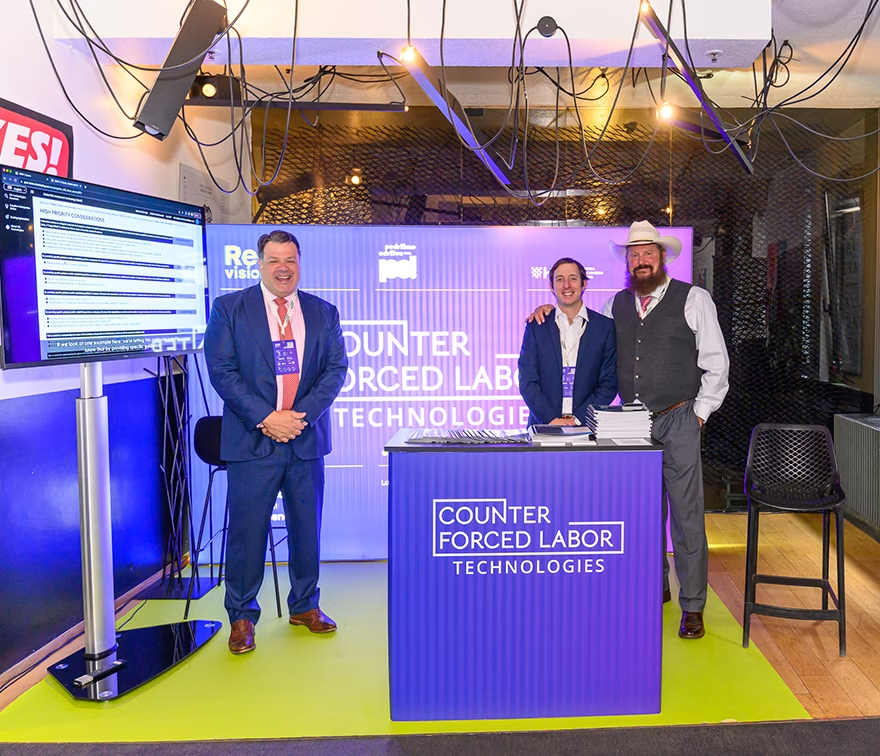
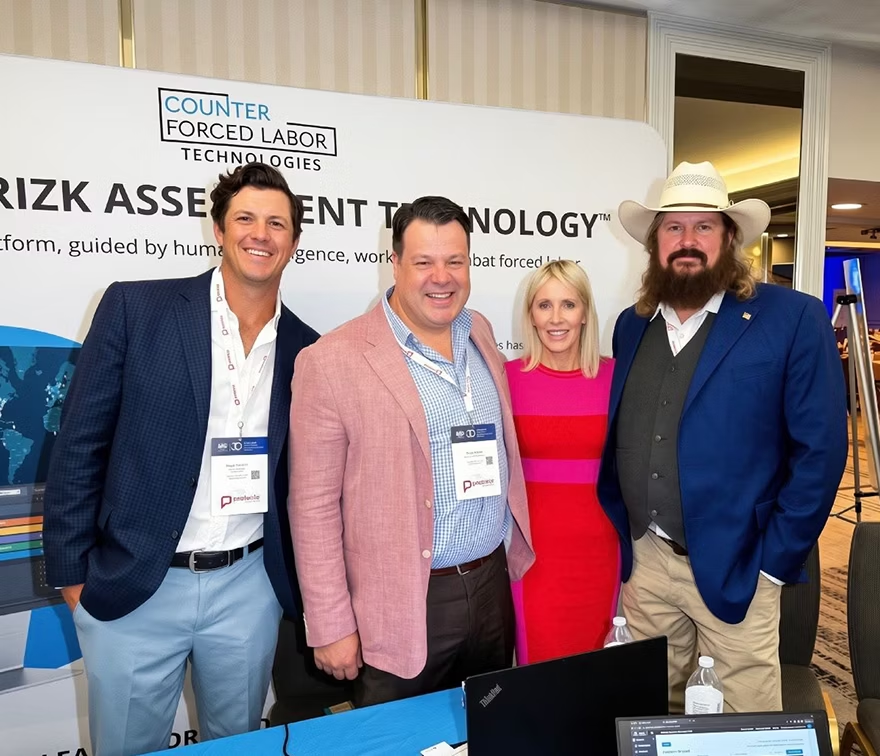
Providing AI-powered, data driven technology products to manage and mitigate forced labor risk in supply chains.


Learn more about GRAT™
Thank you! Your submission has been received!
Oops! Something went wrong while submitting the form.
© 2026 - All rights reserved